Monday, May 11, 2015

Joyful Obedience


Sermon as preached at Lambs and Evington UMC on 5/10/15


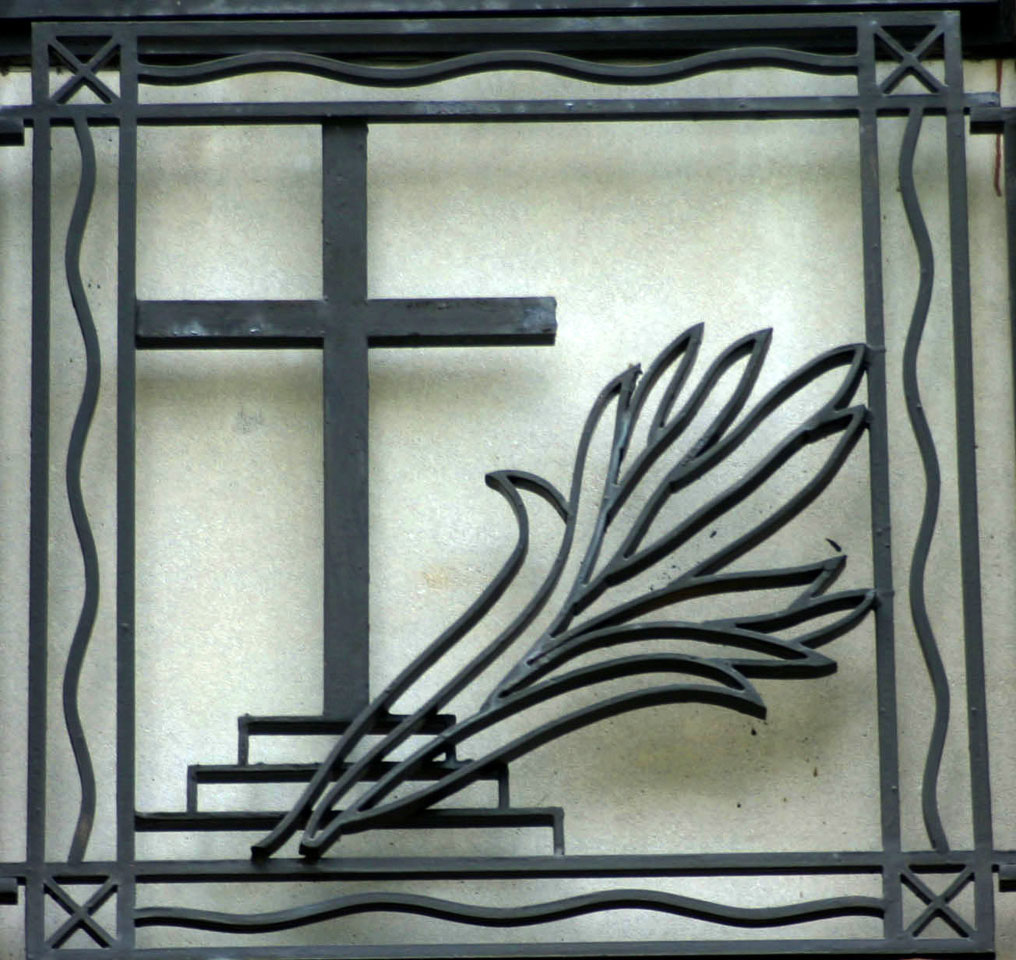
http://diglib.library.vanderbilt.edu/cdri/fulljpeg/colombia-ten.jpg
Image Courtesy of Vanderbilt Divinity Library
As we have journeyed through 1 John a bet you can sum up in one word what the main theme running throughout the text is. (Love).  We have looked at the love of God who has claimed us as children of God. We have looked at the love of Christ who calls us to lay down our lives for one another just as Christ did for us. We have even looked at where love comes from and discovered that we are able to love only because God first loved us. As we turn to chapter 5 of this great book, we see love being expressed in a different way. We hear love being expressed through obedience. Our scripture says, “For the love of God is this, that we obey his commandments. And his commandments are not burdensome,.”
            Some of us may have no problem with this text at all; obedience has been ingrained in you from your very childhood and you would expect nothing less from our God than to demand obedience. Those veterans among us this morning probably know a thing or two about obedience as well. On this Mother’s Day we probably remember a few things about obedience from our loving mothers. We probably remember being told not to do this or not to do that, and remember the consequences for it when we didn’t listen. Still most of us remember this with fondness knowing that our Mothers did it because they loved us. For many however, obedience can be a nasty word, a trigger of sorts to all kinds of bad thoughts and feelings. There are probably a large contingent of people who grew up during both the civil rights and the free love movement that learned obedience was an oppressive word. For women who are taught that they are second class and subservient to men, obedience, especially in the Bible, is just another way to make them feel lesser. Obedience to God the Father may mean something completely different and terrible to a child who grew up in an abusive household. I even have to admit, that there was always something off putting, something that made me cringe when I heard the word obedience, especially when I heard it in church.
            I believe that if we are one of those people who cringe at the word obedience it is probably because first we have seen power abused before, and second because we have a false understanding of freedom. For many of us, “freedom’s just another word for nothing left to lose.” We are free when there is nobody or nothing to tell us what to do but us. Freedom is to be rid of fear, rid of enemies that could harm us, rid of government controls our lives, and free from a God to whom we must be obedient. Our common notion of freedom is summed up in John Lennon’s hit song Imagine where he asks us to, “Imagine there's no countries It isn't hard to do
Nothing to kill or die for And no religion too Imagine all the people Living life in peace.” Lennon shapes an image of the perfect world, a peaceful world around the idea that if we were just free from rules and structures all around us.
            But rules do matter, structure is important, and yes obedience is necessary. This is hard for some to wrap their heads around, especially older children who are starting to enter in to that time in their lives where every other question is why? Why do I have to go to school, Why do I have to take a bath, Why are the commandments and obedience to God important? To answer this question I usually like to play a little game with the kids. I pick up a ball of some sort, and I tell them that they are going to make us their own game using the, expect there can be no rules in the game. Kids will call out ideas such as you have to throw the ball into a basket to score, and I will gently tell them, that’s a rule. Well, maybe you can bounce the ball as high in the air as possible and whoever gets the ball first wins. Well who gets to bounce the ball? “The oldest person.” Well that’s a rule too. And the activity goes on like this until the kids realize that they need rules in order to play a game. A game without rules is actually no fun at all.
            As Christians, sometimes we fall into the trap of thinking that the world would be a better place if we were free from rules. Everything would be better if everyone and everything would just let me decide what I want to do. We even sometimes convince ourselves that our spiritual life is better not when we listen to the commands of God, but when we are free to live and Worship however we want. For Christians though this isn’t freedom. Sure, through Christ we are free from sin and death, but so often we emphasize the freedom from, and forget to emphasize the freedom to. We are free from sin so that we may finally have a right relationship with God. We are free to be faithful servants. We are free to be disciples of Christ, we are free to be kingdom builders.
            In the gospel of John Jesus says, “If you keep my commandments, you will abide in my love, just as I have kept my Father's commandments and abide in his love. I have said these things to you so that my joy may be in you, and that your joy may be complete.” This verse reminds me of when we gather for communion and often start with a prayer of confession, telling God all of the ways that we as a church have failed to be the Church; and as we do there is one line at the end that sticks out. “Free us for joyful obedience, through Jesus Christ our Lord.” Those are two words that you have never associated with each other; Obedience and joyful. When we realize that as we confess our sins that Christ has already forgiven them, that our failures and shortcomings do not stop God from calling us into the world transforming ministry of Kingdom building, and that God still promises victory even with our failure; then we begin to understand the role of joyful obedience. Imagine you were walking up for a job interview for a important project in the community and the boss asks for a resume and you say, “well I failed at this, and I forgot to do this, and I didn’t listen to this when I should have…. do you think you would get the job? But God says, “Ok, welcome aboard, this is how we are going to change the world.” Who wouldn’t want to work for a boss like that? Who wouldn’t joyfully follow such a God?
            The question we must ask is how do we obey? We know that our obedience is best summed up in the two commandments to love the Lord your God and to love your neighbor, but what does obedience to these commandments look like? It looks like Jesus. If we want to follow the way of the Lord, we must learn from the example of Christ. Who as Philippians tells us, “humbled himself and became obedient to the point of death-even death on a cross.” If we look at Christ’s ministry to the world then we will know what perfect obedience looks like, we will know what it means to love God and Love neighbor. Obedience looks like a young Jesus sitting and listening to the Rabbis in the Temple. Obedience looks like Jesus healing the sick and giving sight to the blind. Obedience looks feeding 5000 tired and hungry listeners who had gathered to hear the word of God proclaimed. Obedience looks Jesus as he went out alone to pray and be in communion with God the Father. Obedience is Jesus washing the feet of his own disciples.
            As we see Christ’s obedience to the will of God throughout his life and especially in his time of ministry we see the essence of this obedience almost bookended with two acts. Although Jesus’s impact in the world started that night he was born, his real ministry started at the Jordan River. John the Baptist for some time had been preaching a gospel of repentance and foretelling of the Messiah who was coming who would be greater than he. As he was baptizing members into this very truth, the one whom he was talking about arrived. John recognized this significance, and at first he refused to baptize Jesus. He insisted that it should be he that should be baptized by Jesus. In this first act of baptism, Jesus humbled himself, and received the same claim upon his life that we now as brothers and sisters in Christ have also received. You are my beloved with whom I am well pleased. Jesus did not see himself as better than others, not needing to be baptized, but instead he embraced his humanity and our need for repentance and forgiveness and was baptized by John in the Jordan River.
            This marked the true beginning of Jesus’s ministry that included all of those forms of obedience that we mentioned before. Jesus’s final act of ministry however may be the greatest example of obedience the world has ever seen. As Jesus cried out in the garden before his arrest, “Father if you are willing take this cup from me, but not my will but yours be done” we see perfect obedience. We see Jesus who even though he was about to endure a gruesome death, yielded his will to the will of the Father. We see a God who could have torn himself down from the cross, but suffered for our sake. We see the Messiah who did not come with the sword to topple the enemies, but who through love and mercy exemplified on the cross established a new world order. This truly is love for God and love for neighbor, this truly is obedience.
            We see that Jesus’s ministry in a way in bookended with his baptism and his death on the cross. The elder writing 1 John notes this in our scripture for this morning saying, “This is the one who came by water and blood, Jesus Christ, not with the water only but with the water and the blood.” Christ’s ministry through the world started with the water of baptism and ended with his blood on the cross. We know that this really isn’t the end of Jesus’s ministry. On the third day Jesus rose from the grave conquering sin and death. He visited with his disciples and walked on the road to Emmaus with some fellow followers. Next week we will celebrate Jesus’s ascension into Heaven where he now sits at the right hand of God the Father, and the week following we will celebrate Pentecost; where the early church was born and received the power of the Holy Spirit. Jesus’s ministry is not over, it now through the power of the Holy Spirit continues in us.
            The cornerstones of our ministry here on Earth are also the water and the blood. Like Christ our ministry in the world begins with the waters of baptism. Though God’s grace had worked in our lives previously, at baptism we are claimed as one of the children of God, and at confirmation we affirm that we will be obedient to God. In the United Methodist Church we profess to be a faithful member through our prayer, presence, gifts, service, and witness. And through the blood of Jesus we carry out those vows. As we gather around the Communion Table we are in prayer with one another to God. We are present and gathered from our individual day to day activities as one body, the Body of Christ. We offer our gifts before the Lord, and we are prepared by God’s grace to go out into the world in witness and service to be Christ’s body for the world. Like Christ, the foundations of our obedience to God is the water and the blood.
            Through this obedience to Christ we are free to do some amazing things. We are free to gather as young and old, rich and poor, black and white and truly experience a loving community that the world cannot give. Through the obedience we are able to seek justice and topple oppressive regimes. Let us not forget that the Civil Rights Movement that did so much for this country was in rooted in Christian practice. Through obedience we are able to come together as a community and provide a house to a man in need, and provide food and resources for those who do not have them. Through obedience to God, colleges like Liberty and Randolph, and my Alma matters Duke and Randolph-Macon were created to give us our children opportunities for education that many of our parents and grandparents did not have. Through obedience to God, Ann Jarvis and her daughter Anna recognized the gifts and voice that women and in particular mothers had, at a time when women had very little rights; and through obedience these women helped to establish this very holiday of Mother’s day that we celebrate today. When we are obedient to God, When we follow Christ’s example of loving God and loving others, we participate in these groundbreaking ministries. We participate in the building of the Kingdom of God, and who wouldn’t want to be part of something as spectacular as that? So this morning may our prayer truly be, “free us for joyful obedience.”

Monday, May 4, 2015

Because God First Loved Us

Sermon as preached at Lambs and Evington UMC on 5/3/15


October 5, 2013. Sweat dripped down my face and my knees were knocking as  I stood in Duncan Memorial UMC before my friends and family, but more importantly before Heather as I waited to say those special vows of marriage. The party had already processed in, we had sung a great hymn of love, and the minister had announced the intent of the day, we were getting married. As the service went along I must admit that most of it felt like a blur, but I remember one of my close friends getting up and reading scripture from 1 John chapter 4. I remember in the midst of the all of the nerves that come with the service, and the excitement to be getting married to Heather, hearing these words that kind of refocused me, and made me recognize what it was all about. “We love because he first loved us.” Wow, whoever planned this wedding really knew what they were doing. This expression of love from me for Heather, Heather for me, and to us both from all of our friends and family was only possible because God first loved us. For as much as that day and this marriage is about the love between Heather and I, it is more of a manifestation of God’s love lived out in the world.
            As we have journey through 1 John we have talked a lot about love. We have differentiated the love of God from the profane and mundane ways that we usually talk about love. We have even asked the question how do we know when we are loved? In all of our questions about love we have so far failed to ask the most basic, cliché question made popular in song. We have failed to ask, “What is love?” Not only what is it, but how is it possible? If I asked you to define love what would you say? Is it positive emotional response to someone or something you hold dear? Is it a the bond of a relationship? Is it self-sacrifice for the well-being of another?  I don’t think any of these answers would be wrong, but for us as Christians 1 John makes the answer to this question as simple as possible. What is love? God is love. Notice that it doesn’t say that God is loving; this isn’t just a description of God’s character like saying God is caring, or God is just, or God acts righteously. God is love. There is no such thing as love apart from God. Love only exists because God is love.
            What then is this thing that we experience in our lives that we call love? Love as we know it is God’s manifestation in our lives and in our world. When God created the world he looked at it and called it good, and when he created humanity he called it very good. If God is love, then we are created by love. Our very existence is through love. And even when we threw it all away, when we chose pride and arrogance over that love from God as we consumed of that sacred fruit in the garden, we never stop being creatures of love, for Love made us. Love covenant with the Israelites to be their God and for them to be God’s people. Love spoke through the prophets to draw those who had strayed back to the fold. And when all else failed, Love “sent his only Son into the world so that we might live through him. In this is love, not that we loved God but that he loved us and sent his Son to be the atoning sacrifice for our sins”. Our God, who is love, has called us as his children, as children of love.
             And that is why those words spoken at Heather and my wedding are so important, “We love because he first loved us.” The love expressed in our marriage is only possible because we know love through God who first loved us. The love I have for my mom, dad, sister and all my genetic family is only because God first loved us. And the love that we share this morning as the Church, as children of God, as children of love, is certainly only possible because God first loved us, and has continued to show us that love, including the embodiment of love in human form through Jesus Christ. Through Christ, humanity has been able to witness firsthand what the love of God looks like expressed as a human. It is that manifestation of love that we are called to strive towards.
            In fact our scripture tells us that “God’s love is perfected in us.” For many of us this term perfection is difficult for us to grasp. How can I be perfect? Does that mean that I will never mess up, that I myself will be like a God? It is hard for us to understand growing in love, but I think once again the analogy of a wedding is somewhat helpful. When Heather and I said our vows, that was not the end of our love for each other, it was of course the beginning. And everyone will tell you that marriage is hard work, but why is that? It is because your love for each other is not staying stagnant, it is growing and it takes work. Love takes work when you begin to live full time with someone. Love takes work when decisions about time and money are now made together. Love even takes work trying to decide what to watch on t.v. some days. Our love is growing, it is changing and it really is working towards that day in which the two truly do become as one.

            And that’s just love in marriage. If we want to grow in love, we must grow in God, for God is love. To be perfected in love is to be in relationship with God. John Wesley explains, “No one, then, is so perfect in this life, as to be free from ignorance. Nor, Secondly, from mistake; which indeed is almost an unavoidable consequence of it.” Perfection is not that we become infallible like God that we cannot fail or err, but perfection is a perfect unity of our heart with God. Perfection is our ability to love as God loves, and in doing so truly exhibiting through us the God of love. When all of those areas of our lives in which we show love (or should show love) are tied together by the God who is love, then God love is perfected in us. And why wouldn’t we seek that? Why wouldn’t we want to love like the true source of love? Why wouldn’t we want to grow closer to God, and to each other? Maybe because that love requires us to lay down our lives for others as Christ laid down his for life for us? Or are we afraid to be perfected in love because that might require us to love those we don’t want to love.  Maybe it’s because we’re afraid to lose control, we want to love on our own terms, but there is no such thing, because we are only able to love because God first loved us. So let us strive for that love to be perfected in us, so that we may truly know with our hearts and our minds, that God is love. 

Monday, April 27, 2015

More Than Words

Sermon as preached at Lambs and Evington UMC on 4/26/15


Title: Banks of the Seine, Vétheuil, 1880
[Click for larger image view]
Image Courtesy of Vanderbilt Divinity Library

Love, Love, Love.  Sometimes 1 John can start to feel a lot like the beginning of that classic Beatles song, “All You Need is Love.”  It seems as though every other word or thought that comes from the author of this text is about love. Of course, that is not a bad thing, but in today’s society we can become so inundated with the word love, that we can begin to lose sight of what it really means. Today, when we talk about love the first thing we usually start talking about is romance. We talk about finding the love of our lives. We watch shows and movies and read books about different love stories. We even call the most intimate act of a romantic relationship “making love.” But if we branch out of the romantic love we might begin to talk about love for family, or love for a friend, or even love for our pet. Still we use this word love in other different ways. We say we love something when we are passionate about it or when we enjoy. We say I love my job, or I love hiking, and sometimes we water the word down so much that we say I love frappacinos from Starbucks or that we love a show on T.V. When we hear the word love used in so many different ways almost every day,  it is easy for us to overlook  or shrug off it use here in 1 John.
            The love that 1 John is talking about here in our scripture for this morning is radical. It is not just another word or thought, it is the essence of our relationship with God and with others. In fact, this scripture echoes the Great Commandments of that Jesus gave, “Love the Lord your God with all of your heart, all of your mind, and all of your strength, and love your neighbor as yourself.” Our relationship with God  and our relationship with others is through love; a love that consumes all of our heart, that consumes all of our being. When we hear this commandment many of us think to ourselves, “I already love God and my neighbor, so I guess I’m good.” Apparently this was the mentality of the community that this letter was written to as well. The whole community confessed to loving God, they confessed to loving each other, and yet there was so much division amongst themselves that you would never know it. There were so many in the community suffering while those with the means to help just seemed to ignore it. And so our author writes to this community and says, “ Little children, let us love, not in word or speech, but in truth and action.”  How often do we claim to love but only express it in words, but God calls for more than words.
            And it begs the question, How do we know what love is, and when we are loved?  In 1990 the group Extreme put out a song called “More Than Words.” The song is a love ballad like many songs, but in the song the artist pleas for an expression of love that I believe translates well into Christian love. The song begs for, “More than words to show you feel That your love for me is real What would you say if I took those words away? Then you couldn't make things new
Just by saying I love you.” The song speaks to the fact that love is more than a verbal assent to an ideal. Love is more than words, love is action. As Christians, when we speak about love for God and love for neighbor we are talking about more than words. Love for God is not just saying that we believe. Love for neighbor is not just saying that we recognize that they are of sacred value. Love is action. ““ Little children, let us love, not in word or speech, but in truth and action.”
            So what does this love in action look like? Well, the Bible makes it pretty easy for us, it looks it Christ. Our scripture for this morning even begins saying, “We know love by this, that he laid down his life for us--and we ought to lay down our lives for one another.”  We know love because of God. This is a theme that we will look at in more detail next week, but for the moment notice that the greatest example for us of love, is that Christ was will to lay down his life for us. And so we ought to love likewise, we should be willing to lay down our lives for one another. What does it mean to lay our lives down for one another. Usually when we hear this phrase we hear it as we talk about the heroic actions of our soldier putting their life on the line for our country. We hear it when we talk about our first responders, those police officers and fire fighters who risk their lives in order to protect the lives of others. Lay down one’s life as we know it is a grand and heroic act. We would expect that for a Christian to lay down their life it would require a grand heroic act as well. Certainly through the history of Christianity we have seen faith and love lived out this way through the lives of what we call martyrs. This goes back as far as early Christianity with people like Justin Martyr. Justin was a philosopher who was converted to Christianity in the time when the Roman Empire was still hostile to Christianity. After his conversion, Justin spend most of his time defending Christianity and even started a school to teach the next wave of Christian thinkers. After and debate that he had with one man, Justin was tried, convicted and killed for his beliefs.
            We see a similar passion and willingness to lay down one’s life from some more recent figures as well. In the 1930s during the rise of Nazi Germany as many Christians were being swept up into the Anti-Jewish anger, Dietrich Bonhoeffer, a Lutheran pastor and renowned theologian refused to go along with the Nazi regime. He openly spoke out against the Nazi’s treatment of Jews, especially the concentration camps, and for it he was arrested in 1943. He himself was sent to a concentration camp and in 1945,  just weeks before Nazi Germany crumbled, Bonhoeffer was killed. Finally, no one can forget the actions of the Rev. Dr. Martin Luther King Jr. Channeling his faith in the one who willing died on the cross for us, King helped to lead a Non-violent resistance to the unjust and oppressive laws in society toward African Americans. Though he often faced ridicule, violence against him, and even imprisonment, King fought on for the rights of millions around the country. That fight cost him his life as he was killed in Memphis, Tennessee in 1968. These are just a few examples of those who were willing to lay down their lives for others and for their faith. While these are often extreme examples I do believe that our faith calls us to act accordingly if we were ever to find ourselves in a similar circumstance.
            Laying down our lives for one another is more than just martyrdom. It doesn’t necessarily mean dying for our beliefs, but it does mean risking ourselves and our livelihood for others. It means putting others before ourselves, even when that might affect us negatively. And it doesn’t always have to be some grand gesture. Let me tell you a story, it’s one that I have not shared with many people, mostly because it is a little embarrassing personally, but I believe it shows the little ways in which we can lay our lives down for others.
            When my parents divorced, my Mom kind of bounced around from house to house trying to find a place that was right for us. Most of the times this was out of the school district that I grew up in and that my dad still lived in so Mom would have to take me to school on weeks that she had me. My freshman year of high school we moved into a place that was in the same school district so I could finally ride the bus to get to school. Though it was in the same district, the high school I went to was made up of two different middle school, and where my mom lived was where the kids from the other Middle school lived.  In essence, when I rode the bus from her place, I had no friends on the bus because I hadn’t gone to middle school with the kids. As you can imagine I was a pretty quiet kid, so I didn’t go out of my way to make new friends, since I would just see my old ones once I got to school. One day, however I remember two of the older boys in front of me turned around and started picking on me. I tried to ignore them, but they wouldn’t let up. As I started to get frustrated, out of nowhere the girl behind me said, “Leave him alone.” It was girl that was in some of my classes, but I didn’t really know, I think her name was Jessica. She was your typical pretty blonde cheerleader, but here she was defending me, someone she hardly knew, to people who could have turned on her. She certainly wasn’t risking her life defending me, but as someone who was already kind of popular but still just a Freshman, still with four years of that social pressure ahead of her, she did risk her reputation to stand up. I never got to thank her, I was too embarrassed to be defended against bullies by a pretty girl, and I doubt she even remembers the encounter, but I sure do.
            Maya Angelou once said, ““I've learned that people will forget what you said, people will forget what you did, but people will never forget how you made them feel.” I have not forgotten how that act made me feel that day. 14 years from that day, if that were to have never happened Jessica honestly would be another name and face that I would have forgotten, but because of one simple, yet brave selfless act, I remember her as a caring and loving person. As Christians we are called to lay our lives down in similar ways. Not always in grandiose acts of martyrdom like Justin, or Bonheoffer, or King, but also in the everyday simple actions like Jessica.  We are called as Christians daily to put our wants and our desires behind us and to first lift up our neighbors in need; to truly show them the love of God through the ways in which we love them.
            As Christians we can talk, and preach, and read, and pray, and sing about love until our faces turn blue, but it won’t mean a heap of good if we do not live and act in love. We cannot talk about our love for God, and yet fail to go to God in prayer, to join in Worship whenever possible. We cannot talk about our love for this Earth that he has created while we destroy with chemical spills in our water, or the overuse of Styrofoam which will sit in landfills for centuries. We cannot say that we love God’s creatures, and allow pets to be abused or neglected, or Rhinos in Africa to become nearly extinct just because some people around the world believe their horn to be an aphrodisiac. We certainly cannot say that we love our neighbor when there are those who are hungry, homeless, or sick in our own communities that we ignore as we go back to our own homes, cook plentiful meals that we sometimes even let go to waste, and enjoy our little pleasures that we have, however meager they may be.  If we speak about love but do not act, then we have no right to speak about love at all. “Let us love, not in word or speech, but in truth and action.” Love requires more than words.

            Yesterday I was able to witness love in action. Some of us went yesterday morning and prepared breakfast for men and women who came to help build a house for a veteran in need though Habitat for Humanity. To see so many people from the community come out to help someone in need was a greater sermon than I could ever preach here in the pulpit. Later that day I was privileged to attend the baptism of the daughter of two friends ours. They are a clergy couple that wouldn’t both be able to be at the same church for Sunday worship, so they had their baptism yesterday, and because of that I was able to be part of the service. As I watch this beautiful girl being baptized, claimed as a child of God like we talked about last week, I as thought about the Habitat community that I had just seen hours earlier. The same love and community that those builders had shown for the veteran in need, was the same love and community that this beautiful girl was being brought into, and in fact was the same love that she will be called to show. The connection to me couldn’t have been more striking; these vows, these words said in this sacred moment of baptism are more than words they are a declaration of Love. A declaration to love like the men and women of Habitat for Humanity. A declaration to love like Jessica did on that bus over a decade ago. And yes, when necessary a declaration to love when necessary to the point of giving our lives like Justin, Bonhoeffer, and King; because Christ showed us the greatest love on the cross. These words at baptism are a declaration of love, first and foremost from God to us, but also from us, to live and act in love towards God and towards our neighbor, because love is more than words. 

Monday, April 20, 2015

Children of God

Sermon as Preached at Lambs and Evington UMC on 4/19/15


Has anyone here ever tried to research their family tree? I remember in Middle School one of our assignments was to do just that, trace our family as far as we could and then too present it to the class as a family tree. This involved sitting and talking to my parents and my grandparents to get a collection of names and dates if they remembered them. As a middle school assignment, my tree wasn’t all that intensive, mostly a collection of Aunts, Uncles, and cousins, and a history that stretched as far as my great-grandparents. Still, displayed on a huge poster board it was impressive to see all of the branches that could stretch just from the family members I knew. On Ancestry.com you can go into even more detail with. You start by putting in yourself and your parents, and maybe your grandparents and then usually a little leaf will appear. It takes you to information like birth, death, or marriage certificates, and from there you usually find information about their parents or aunts or uncles and cousins, and as it all adds up you start to see a massive family tree. James is the child of so and so and his cousin is the daughter of Gertrude. I think there is something in finding out who our family truly is, and traditionally this has been with the analogy of a tree.
             When we think about family we tend to immediately go to that genetic nuclear family. Whose child am I? Who is my sibling? We think first of our parents and grandparents, our brothers and our sisters. For many of us it is natural to frame our understanding of family around genetics because we have been privileged to grow up in an environment where we belong. But this concept of family is different for almost everyone. The other day apparently was National sibling and to celebrate many people on Facebook including myself, changed their pictures to a picture of them and their siblings. After a while I began to notice many only children make many statements about not having a sibling, some even put up pictures of cousins or just best friends and called them brother or sister. It got me thinking, for an only child who is their brother or sister? For the child who was adopted genetics is not the best indicator of who their family is. For those whose ancestors were brought here by force not choice; a family tree can only go so far, and may stir up some pain. Family is not as cut and dry as we sometimes make it out to be.
            As Christians we have taken on a new understanding of family. When Jesus asks his disciples “who are my mother and my brothers” it became apparent that family is more than just genetics. Those who follow Christ are Christ’s family, and are each other’s brother and sister. It is through the water and Spirit of Baptism that we are claimed as children of God and enter into this family, the family of God. As Baptism challenges our understanding of family, maybe it can also challenge our typical means of tracing our family history. Maybe we can move from a family tree towards a family stream. Think for a moment about your baptism and who baptized you. That same person who baptized you by water and the Spirit in the name of the Father, Son, and Holy Spirit, where you were claimed as a child of God; was themselves a child of God and baptized. And they were baptized and brought into the family of God by someone who was also baptized. And if we begin to trace not the branches of our family tree, but these streams of Baptismal waters we find ourselves connected to the early believers baptized on that day of Pentecost. We find ourselves connected to the Ethiopian Eunuch baptized by Philip. If we follow those streams of baptism far enough we even find ourselves connected to Jesus Christ himself. And as we hear the words from heaven proclaiming, “This is my son with whom I am well pleased” we realize that through that same water and Spirit we too are children of God.
            The author of 1 John understands the importance of being children of God. Despite its name this book of the Bible was most likely not written by the same evangelist as the Gospel of John. Instead this book is much more like one of the letters we find from Paul written to a specific community for a specific purpose. The community this letter was written to, was one that was probably highly influenced by the Gospel of John, hence the name 1 John. Like almost every letter to a community we have in the Bible, this letter seems to address a conflict in the community. There seems to be a lack of understanding of what it means to follow Christ, and there seems to be many false teachers leading the members of the community astray. As we will see in the next few weeks, the author of 1 John settles these conflicts through exploring love, and in particular God’s love.  In our scripture for this morning the author begins by describing our relationship to God as being children of God.
Title: Jesus' hand reaches out to the children
[Click for larger image view]            What does it mean to be a child of God?  It means we belong to God. It means we are able to hear the words of God spoken to us through the prophet Isaiah saying, “Do not fear for I have redeemed you, I have called you by name, you are mine.” You are mine. It is in these words that we are able to find comfort, a comfort the world cannot give to us. It is a promise from God that there is nowhere we can go, or anything we can do that will leave us deserted from our heavenly Father. It is a promise that in our times of fear or grief, like a mother God will be there to nurture us. Being children of God means that our connection to the Holy of Holies, is through an intimate, familial relationship. Therefore when God’s children are out in the community helping those in need, when they are studying they are studying the Word, when they are comforting those who are sick or grieving we can almost hear the words of a proud parent crying that’s my son, that’s my daughter. But though there are certainly things we do that please our Father above, noting can earn or take away God’s love. So even when we fail, when we do what we know we shouldn’t, when we have failed to be an obedient church, when we have not love our neighbors, God still cries out, “You are mine” you are a child of God. It’s like have you ever been a parent or family at a large gathering where there are a bunch of kids playing. You are talking to the parents, when all of the sudden your kid comes around all covered in mud or paint, or they broke a nice piece of art and that dreaded question is asked, “Whose kid is this?” Unlike some of us would, God doesn’t hesitate, they are mine, they are a child of God.
            Being a child of God means we belong to God, but this is not a select family, it is a place where all belong. Being God’s children is a word of hope for so many in the world. There are so many who feel worthless, so many who feel abandoned, so many who feel ridiculed or despised; and so in a world in which they feel rejected, in God they can find a place where they belong, you can find a place where you belong. Because as a child of God you are family, you are a son or daughter of God, and likewise you are a brother or sister to many.
            As we hear the good news today that we are children of God, that God has claimed us and that we belong, we must also wrestle with what it means for us to be a child of God.  How does the world know we are God’s children?  Often it is easy for the world to tell whose child we are. About a month ago I talked about how messy and unorganized I was and how I always needed Heather to find things. When it comes to space, this is true I am as unorganized as they come, but when it comes to time the same cannot be said. I am a meticulous planner of time. Each day I plan out what I plan to do and when, I’m such a planner that I even account in my day to day plans, time for unexpected, unplanned events! And because of this I hate to be late. If I say we are leaving at 10, we aren’t leaving at 10:05 we are leaving at 10. It reminds me of Dad and I sitting in the car on Sunday morning waiting for the girls to be ready to leave. When I get into one of these tizzies about time those close to my family will often say, “You are definitely Wayne’s son.” We tend to resemble members of our family.  I am told often that not only did I get my red hair from my Papa, but also many similar personality traits, including the call to ministry.
            Is the same case true for our Heavenly Father?  Do we share in the likeness of God?  Sadly, often the answer is no. Our scripture tells says, “ Beloved, we are God's children now; what we will be has not yet been revealed. What we do know is this: when he is revealed, we will be like him, for we will see him as he is” Here we find really the paradox of faith, the paradox of being a Christian. We are children of God, but still we must become children of God. We are children of God in that God has claimed us, there is nothing that we can do that will either earn us that title or cause God to take it away. It is the gift of grace, freely given, that we are children of God. And yet though we are God’s children we do not act like children of God. We do not love as God loves, we do not serve as God serves, we do not adequately reflect our kinship to the Lord of Lords. What we will be has not yet been revealed, but when God is fully revealed we will be like him; and yet God has already been revealed through Jesus Christ and so we are called to be like him. We are called to be the children of God.
            But how do we do that? If we are already God’s children, how do we become God’s children? First and foremost it starts with us realizing that we are in fact children. No matter how old we are or how much we think we know or have experienced, we are God’s children, not God. This seems like a pretty simple concept to grasp but Christians seem to fail at it over and over again. We tend to act and to speak as if we have all of the answers. We tend to judge other as if we ourselves are the judge siting on the throne. We tend to ignore our daily prayer life because we think that we can handle it, and only turn to God when things get out of our control. In our daily lives and in the life of the Church we act as though we make the rules, we set the tone, we make the decisions; but how quickly we forget that we are not the Father, we are but children of God.
            And as children we have a lot of growing up to do.  Too often we act as though Baptism; that water that connects us to each other through that family stream, it the end of the story. We act as though because we are saved we can just wipe off our hands and walk away. The truth is however, that baptism is not the end, but is just the beginning of the journey. Jesus told Nicodemus that we must be born again. We love this term, “born again Christians” but if we are born again that means that we are infants, and we have a lot of growing to do. We must allow God to be like our father, instructing us in the way to go, and disciplining us when we go astray. We must allow Got to be like our mother, nurturing us when we fall, feeding us with the spiritual nutrients we need to survive. In order for us to become a reflection of our Heavenly parent, we must be will to submit to the guidance and nurture of God. We must be willing to turn away from our sin and turn towards God. We must be willing to journey.

            And as we journey, as we grow as children of God remember those words of comfort from God  “You are mine.”  You are God’s when you feed the homeless, visit the sick and those who are imprisoned. You are God’s when you stand up for justice and have compassion for the marginalized of our society. But you are also God’s when you fail. When you put yourself above others, when you scorn a friend or talk bad about a neighbor you are still God’s. Because God has claimed you as one of the children of God, when you fail and when you succeed you belong to God. And so in our journey in which we are but infants, may we strive to live in a way that reflects the love that God has shown for us, so that when someone looks at us they may say, “Surely they are a child of God.”

Monday, March 23, 2015

Harvest and Spring


Sermon as preached at Lambs and Evington UMC on 3/22/15


Read John 12:20-33


http://diglib.library.vanderbilt.edu/cdri/jpeg/8)%20Cross%20with%20wheat%20chaff,%20close%20up,%20lower.jpg
Image Courtesy of Vanderbilt Divinity Library


It is that time in the calendar when spring is finally here! This week we have already had some beautiful days, and even though we have seen some rainy ones as well, at least it is not snow, right? As spring begins to roll in there is so much that I look forward to. There is March Madness of course, but I really look forward to hikes in the mountains, grilling some hot dogs and hamburgers with friends, and just so many other activities of enjoying the beauty of creation as it begins to sprout from its hibernation in the dark cold days of winter. Although spring is here and all the joys that seem to go with it, our scripture from the lectionary this morning seems to miss this memo. In our scripture today Jesus does not talk about the joys of spring, but rather speaks about the time of harvest, and the death of plants. In particular Jesus speaks about wheat saying, “Very truly, I tell you, unless a grain of wheat falls into the earth and dies, it remains just a single grain; but if it dies, it bears much fruit.” At the time of harvest in the fall, what is called “Winter Wheat” dies leaving it seeds in the ground to grow throughout the winter and be ready for spring. Still growing up in the suburbs of Richmond not really growing up around farming, I have to admit when I think of harvest season, I don’t think of wheat, or any other produce for a matter fact but one; pumpkins.
            To me nothing signals harvest time like Pumpkins. This is probably because it coincides with Halloween and the tradition of making Jack-O- Lanterns. For our family, going to the pumpkin patch to pick out our pumpkins to carve was one of the highlights of the season. It was so much fun to bring them home, cut them open, and to cut crazy faces in to the side of them, and then light them up at night for all the neighborhood to see. I remember one year as mom was cleaning out the pumpkin and saving the seeds in order to roast them, I asked if I could have a seed or two to plant. Now no one in my family is known for their green thumb. We did not have a garden, but rather just patches of soil around the house for flowers. I asked if I could plant one of the seeds on the side of the house where there weren’t many flowers, and my mom said sure, probably thinking nothing of it. So I took that seed and planted it, and every other day I would come out and water it and check on it. To everyone’s surprise, a few weeks later a huge vine started to grow in the soil. Weeks later to the dismay of my mother that vine continued to grow, choking out the flowers all around it. Finally a little lump began to grow. Unfortunately the story does not have a happy ending for me; the exterminator came and sprayed for pest which I think ended up killing my pumpkin; but the joy that it brought me to see a pumpkin grow out of something that we had carved up and killed, stuck with me for a long time.
            And that was just from one seed. Imagine what would have happened if instead of roasting the rest of those seeds we planted them in a large garden. That one pumpkin, that was now dead, could produce a whole patch of new pumpkins. I think about my pumpkin as I read our scripture for today, and it begins to make so much more sense to me. For although the calendar on our walls may say that it is spring, time for new life, our Christian calendar tells us it is still this season of Lent. Whereas Easter, like spring, is the celebration of new life, in particular the new life Jesus Christ bring through his own resurrection; Lent is the time that prepares us for that new life. It is no coincidence that in the Northern Hemisphere then that Easter takes place in the joy of Spring, while Lent for the most part takes place in the dead of winter.  For us to understand the joy of Easter and new life, we must first grapple with the reality of death.
            As Jesus approached the end of his own life, this is the reality that he tried to share with those who would listen; that in order for there to be new life, there must first be death. Our scripture starts with some Greek Gentiles coming to Jesus. This is an extraordinary event in its own right since Jesus was Jewish. We know that Jesus came to save the whole world, but that wasn’t as obvious to the Jewish believers at that time. And so Phillip and Andrew go and tell Jesus of the Gentiles request. To this Jesus responds to the disciples in such a typical Jesus way. He tells stories and analogies of his own death and how the hour has come. In essence he tells the disciples that the gentiles, in fact all the world will get a chance to see him when he is lifted up; that is when he is killed, lifted up on the cross. This message of Christ’s redemption through death would seem totally unheard of for the disciples except for that short parable about the grain of wheat. Jesus uses something that the disciples are familiar with, and through it Christ’s death begins to make sense. For me it makes more sense in terms of my pumpkin. Unless that pumpkin is killed, taken of the vine and carved open, it will not bear the seeds needed for new life. Likewise Jesus can come and live and teach us about God, but through his death we are able to receive new life.
            This must have been a difficult message for the disciples to hear. This man that they loved so much, the one that they are following and learning from is telling them that he must die in order for there to be new life. This is even a tough message for Jesus himself. He prays, “Now my soul is troubled. And what should I say--' Father, save me from this hour'? No, it is for this reason that I have come to this hour.” Jesus was scared; it is not like he wanted to die. Scripture says that his soul was troubled, but Jesus knew what needed to be done. He knew that in fear he would want to ask God the Father to spare him, but that his whole reason for coming was in order to be lifted up. Lifted up on the cross for all to see, so that whoever sees and follows may have new life. That by being lifted up in his death, he may be lifted up and exalted for the life that he brings through his resurrection. As we prepare for Easter, for the resurrection of Christ, for new life, we are first confronted with death. We are confronted with the death of Jesus Christ on the cross, and at the same time we are also confronted with the reality of our own death.
            Recognizing that Jesus brings us new life, reminds us of why we need new life in the first place. We are sinners and have fallen away from God, and we will die. More than this however, is that in our scripture Jesus tells us that if we are to inherit this new life, then we must like Jesus lose our lives. He says, “Those who love their life lose it, and those who hate their life in this world will keep it for eternal life.” Now this sounds a little backwards, if Jesus died so that we can have eternal life, why must we lose our lives as well? Paul explains this conundrum in the sixth chapter of his letter to the Romans, “ The death he died, he died to sin, once for all; but the life he lives, he lives to God.  So you also must consider yourselves dead to sin and alive to God in Christ Jesus. Therefore, do not let sin exercise dominion in your mortal bodies, to make you obey their passions.”  In other words we must to die to sin in order to have new life. This is both literal and metaphorical. The result of sin ever since the Fall from the garden of Eden is death. This means that because of sin we will die, and in our death sin no more. But just as Jesus if died to sin and rose again, then through Christ we too can expect eternal life after death. This is the literal understanding of dying to death. Metaphorically, through Christ we are able to die to sin, to shred away it’s  hold over us and start a life anew with Christ. This is much like the conversation Jesus has with Nicodemous about being born again. Nicodemous was thinking literally, He couldn’t figure how one could physically be born again. But Jesus was speaking metaphorically, that one must start a new life with Christ through water and Spirit. And just as eternal life is brought through death, so too is New Life brought through death to sin. As Jesus says, we must be willing to lose our lives in order to save them.
            This again reminds me of my pumpkin. As we brought that pumpkin home to be carved, long before I even had the idea of planting a seed, there was first a messy job that had to be done. After cutting the top off of a pumpkin, are all of the seeds just right there for you to easily grab? No, especially in bigger pumpkins those seeds are mangled and intertwined in the goopy, stringy, nasty innards of the pumpkin. You have to scoop all of that nastiness out and then somehow separate the seeds from the goop. This is neither a fun, nor an easy task. Maybe we are a lot like those pumpkins. We have the potential for new life that Christ has given us, we have the potential to share it with others so that they too may grow, but our seeds of new life are surrounded, entangled in our stringy, goopy, messy sin. In order for those seeds to be planted, in order for that New Life to begin in and through us, we must allow God to hollow us out. To strip us of that nasty sin that entangles us and separates us from God.
            While this may sound easy, it is something that all of us struggle with. For some reason we love our stringy mess. We have become comfortable with the goop inside of us, and are afraid to let it go. It has become a part of us, just as the stringy innards are part of the pumpkin. But though they are part of the pumpkin, it is not usually what we need. We need the seeds. When cooking we need flesh of pumpkin so we can make pumpkin pie, and pumpkin bread, pumpkin soup and many other delicious foods. The innards are part of the pumpkin, but it is not what makes the pumpkin good. Sin is the same for us. Sin is part of us. There is no human on Earth that is without sin, if there were, then Jesus’s challenge of “Let he who is without sin cast the first stone,” might have gone a little differently. But just because sin is part of who we are does not mean that it is what makes us good. It is not part of humanity that God created, looked at and called good.  But we have become so used to sin being a part of us, that to give up those things that separate us from God, to have our sin scooped away by God makes us feel empty. And we hate to be empty.
            We as humans desire to be full. We gorge ourselves at all you can eat buffets so we can get that painful satisfaction of fullness. We pack our schedules so full that there is no time for anyone, especially God, and we celebrate this and call it a productive day. We pack our houses and pockets with whatever it is that television tells us we need, and then we go back out next we to get more, striving to have our lives feel full. We love to be full, in fact in our consumeristic society today it feels like we worship being full. We worship having everything, doing everything, consuming everything. It has become a ruler over us because we are so afraid of being empty. But Jesus says, “Now is the judgement of this world; now the ruler of this world will be driven out.”  Our need to be full, our desire to consume, our want to hold onto our sin will now be driven out and it is time for us to be emptied. And this is only possible through the God who emptied himself, taking on the form of a human,  humbled himself and became obedient to the point of death, even death on a cross.
            In order to experience New Life we must like Christ be willing to empty ourselves and die to sin. We must be willing to let God hollow us out, to remove all of the messy strings of sin that somehow make us feel full, and in doing so reveal the seeds of eternal that once were hidden. As the sin is slowly scooped out of us, we may actually find that there is comfort in the emptiness. For the first time in our lives we may actually find peace and stillness. For the first time in our lives we may have allowed room for the Spirit to dwell within our very beings. Like a plant that must first die in order to bear fruit, we must be willing to die to sin, so that the seed of life may be revealed.