Monday, July 21, 2014

The Lion's Sacrifice (Hebrews 9:11-22) Reflections on The Lion, the Witch, and The Wardrobe


 Sermon as preached at Lambs and Evington UMC on 7/20/14


Today as we continue our Chronicles of Narnia sermon series we turn to what is most likely C.S. Lewis’s most popular book, not just in the series, but probably out of anything he has written. The Lion, The Witch, and The Wardrobe is one of the most beloved stories from Lewis, and as we explore it this morning we will find  it  probably has one of the most obvious Christian undertones in any of the books. 
            The book starts focusing on the lives of the four Pevinse children: Peter the oldest brother, Susan the oldest sister, Edmund, and Lucy, the youngest of them all.  The children are in London during the bombings in World War II, the government has set up a program allowing children to be housed by citizens who live out in the country. This is the situation the children find themselves in as they are taken away to the house of a Professor Kirke, who just so happens to be a much older Digory, the boy who saw the creation of Narnia.  The children are bored one day and decide to play hide and go seek, As the youngest child Lucy goes to hide she finds a wardrobe in an empty room; the perfect hiding spot. She enters into the wardrobe, and passes a great many fur coats when suddenly the coats look more like tree branches and she finds that she is walking in snow, in fact she is in a whole new world covered in snow. As she explores she meets a faun, a creature that is half human, half goat. Tumnus the faun is surprised to see “a daughter of eve” as he puts it and invites her back to his place. Lucy falls asleep, and when she wakes up, Tumnus is distraught, he tells her that he has turned her in to the White Witch, and that they must go now. Lucy leaves and returns through the wardrobe back to the house. She comes out screaming, I am here don’t worry, but the children have no idea what she is talking about, because time is strange in Narnia, those she stayed a day in Narnia, it was like she was never gone in our world.
            Lucy tells the others about the wardrobe but nobody believes her, they check it out for themselves, and strangely find just a normal wardrobe. One night Lucy decides to go back to Narnia, but this time Edmund is following her and to his surprise he finds himself too in that strange land. As Lucy goes to find her friend Tumnus, Edmund meets “the Queen of Narnia, the white witch. She is intrigued by Edmund, a “son of Adam” and is even more fascinated by the fact that he has a brother and two sisters. As she entices him with his favorite snack, Turkish Delight,  she tells him to go and bring his siblings back to her at her castle.  Edmund returns and finds Lucy and the leave the wardrobe. As Lucy tells Peter and Susan about this journey Edmund lies to his siblings and tells them he was never there.
            Time passes and one day while the house is being toured by visitors, all four children are forced to hide so they won’t be seen and so they all cram into that small Wardrobe, except this time all four sibling find themselves in Narnia. Finally believing Lucy, they follow her to Tumnus the faun’s house but it has been broken into and he was nowhere to be found.  Mr. Beaver sees the kids and takes them back to his home. There he explains that the white witch had taken Tumnus and like many others has turned him into stone. The beaver explains that the witch is scared because there is rumor that Aslan is on the move, and that prophecy foretold that two sons of Adam and two daughters of Eve would come and end long winter of Narnia. As Beaver is explaining all of this, Edmund sneaks off and goes to the White witch’s castle.
            When Edmund arrives, the witch is furious that he did not bring his siblings with him, she no longer pretends to be nice to him, and instead she holds him hostage using him as bait to bring the siblings to her, and together she goes on a chase after the other siblings. While this is going on, Lucy, Susan, Peter, and the Beavers make their journey to the Stone Table, an ancient and almost holy ground where it is said that Aslan has now set up camp.  As  they get closer and closer to the Stone Table, the winter begins to melt and spring is upon them. This stops the witch from catching them before they reach Aslan.
            As they reach the Stone table, the children meet Aslan, the lion, and are told of their role in the upcoming battle; they are also told of Edmund’s betrayal. At that time however, creatures from Aslan’s army were rescuing Edmund from and bringing him back to the Stone Table. The children rejoice in seeing their brother’s return, but their celebration was short lived. The white witch comes and demands the life of Edmund. According the Deep Magic,  the almost law that rules Narnia, the life of any traitor belongs to Jadis, the white witch. Aslan and Jadis talk in private and come to some agreement, but nobody knows what it is.
            Late that night, Lucy and Susan are awoken by a quiet noise, it was Aslan walking by himself towards the Stone Table. The girls join him in his journey, but are told to go back when he got close to the Stone Table.  They disobeyed, and soon they witnessed the most awful scene, Aslan was willingly giving himself up to the Witch. His feet were bound, he was shaved of his beautiful hair, and there on the Stone Table he was killed. Lucy and Susan stay at the Table all night long, weeping over their beloved leader and friend. When morning arrived the girls were still at the Altar but the boys and the rest of the Narnians were marching into battle against the Witch and her army. They fought valiantly, but slowly and surely the Narnians were losing.  Meanwhile, something amazing happened at the Table. There was a great rumble and the huge stone Table was broken in half and the body of Aslan was gone. Finally, there in glory, Aslan, alive and as magnificent looking as ever, appeared to the girls. Together they journeyed to the witch’s castle, Aslan awoke the Narinans who had been turned to stone, and the went and joined the battle. With Aslan reinforcements had arrived, the Army of the Witch was destroyed, and Aslan himself kills the White witch. The four children reign as kings and queens of Narnia for years until one day they find themselves back in a familiar part of Narnia, and end up back in the wardrobe, and finally back in professor Kirke’s house, children once again as if no time had passed at all.
            As I said earlier, this story is probably the most blatantly Christian stories of any of the Chronicles of Narnia books. I sure many of you have already made the connect for yourselves. Aslan the great lion sacrifices himself and rises from the dead, just like Jesus who sacrificed himself on the cross and rose again. While the message of this story is really that simple at the same time there is a deeper meaning that we can draw from our story.
            Edmund is a traitor, or if we want to use church language to describe it, Edmund is a sinner. According to the deep magic of Narnia traitors or sinners were to be handed over to the Witch, the evil one.  Lewis is brilliant with his depiction here, everything has a purpose. We find that this Deep Magic that we read about in our story is in fact shockingly similar to the Law we find throughout the Old Testament. If we want to do a quick crash course refresher on some of the themes of the Old Testament we must remember that early in Genesis God made a covenant to the Israelites to be their God and that they would be God’s people. Later in Exodus we find that this covenant was ratified through the Law that Moses received on the Mountain from God. From then on, the way in which in which the people of God lived as God’s people was through following those laws. Yet,  as humans the people continued to sin, and so the people needed a way to atone, to make up for their mistakes. At that time the way this was done was through animal sacrifice.  Animals would be brought to the Altar, and the priests would then take the sacrifice behind a curtain, into the inner room of the Tabernacle in which it was believed where God resided.
            This was the structure of law and atonement that the people lived by, but how could those sacrifices make up for a perpetual state of sin? What could save the people from the depths of hell, from being handed over to the evil one? What type of sacrifice could cleanse all humanity of their sin?  The blood of the Messiah, the pure and innocent son of God. 
            And  just as Aslan handed himself over to be sacrificed though he himself committed no crime, so too did Christ sacrifice himself for all humanity.  In the story we find the witch rejoicing, she had just defeated her greatest nemesis, she had fooled the poor sucker into giving himself up and now nothing was to stop her from ruling Narnia.  She could finally launch an attack on the rest of the creatures without having to fear the wrath of this great lion.  The great witch had won, or so she had thought.  In fact however it was the witch who was fooled.  Aslan rose from the dead, the sacrifice of innocent blood trumped the sacrifice dictated by the Deep Magic. The Stone Table was shattered, never again will a sacrifice be necessary. The lion reawoke the witches prized stone creatures which she collected like trophies, and she was defeated once and for all, the trick was on the witch.
            This story helps me to picture a quite similar scene with the crucifixion of Christ.  As those nails are pierced into Jesus’s side, as he cries out in his last breath, I can almost imagine the evil one celebrating, thinking that victory is his, and yet the trick is on him. He doesn’t understand the true nature of God, that through love, through the blood of Christ selfless sacrifice, the Law is fulfilled in Christ. As our scripture says, “How much more, then, will the blood of Christ, who through the eternal Spirit offered himself unblemished to God, cleanse our consciences from acts that lead to death,[c] so that we may serve the living God.” In Christ’s sacrifice, Satan lost everything, and we gained eternal life.
Through the blood of Christ there is no need for any more sacrifice. Just as the Stone Table broke in half, we read in Scripture that with the death of Christ, the curtain of the temple was torn in two. The place for sacrifice was gone. God was no longer hidden behind a veil, but now to be experience by the whole world. A new covenant is formed in which the sacrifice necessary for atonement has already been offered up on our behalf.  As our scripture says, “ For this reason Christ is the mediator of a new covenant, that those who are called may receive the promised eternal inheritance—now that he has died as a ransom to set them free from the sins committed under the first covenant.  Through Christ’s blood we have a new covenant, it is why during communion were are told, “this is my blood of the new covenant poured out for you and for many in the forgiveness of sins.
            Through a selfless sacrifice something amazing happened, the forces of wickedness were conquered. Like the love that Aslan showed by sacrificing himself for Edmund, Our Lord has shown us the greatest love by his sacrifice for us. And yet the sacrifice is not something to mourn, for in it sin and death were conquered. Like Aslan Christ rose from the dead, his power cannot be contained. The devil like the Witch has been defeated.  This story reminds us of the triumph that was obtained through sacrifice. It reminds us that we like Edmund have been save from a punishment fitting for our crime. It reminds us that a new covenant has been formed, and it reminds us that like Aslan, the Lord lives and reigns forever. This may be just a children’s story and yet it reminds us of the reality of the greatest story we’ve ever heard. That the innocent Lord was willing to die for us, As Charles Wesley says in his great hymn,  “Amazing love how can it be, that thou my Lord would die for me?”

Monday, July 14, 2014

"The Lion's Song" (Reflections on The Magician's Nephew) Genesis 1:1-25

Sermon as preached at Lambs and Evington UMC 7/13/14


This morning we begin our sermon series focusing on C. S. Lewis’s  “the Chronicles of Narnia”  These are stories that as a child I loved, these books would let my imagination go wild as new worlds and creatures were introduced to me. It was in seminary that my eyes were once again opened to these novels.  I was taking a course on C.S. Lewis, and of course we studied many of his important personal and theological works such Surprised by Joy,   A Grief Observed,  The Screwtape Letters, and of course Mere Christianity. Surprisingly, in the class we actually spent more time on his fictional writings, including the Chronicles of Narnia, and it was there it began to make sense to me; these stories though fiction, speak to the truth of God and of Christian living. Over the next seven weeks we will look at each book, and I hope that your eyes are too opened to the wealth of knowledge these books have to teach us about God.
            This morning we begin not with C.S. Lewis’s first and most popular book, The Lion, the Witch, and the Wardrobe, but rather with The Magician’s Nephew, a prequel to all the other stories.  This was Lewis’s preferred reading order,  and it makes sense because the Magician’s Nephew is a story that teaches us about the wonders of creation.  Our story starts out with a young boy named Digory who along with his mother have moved into his Aunt and Uncle’s house because his mother is deathly sick. As he’s there he notices that his Uncle acts very odd, and is often locked in his room for hours with only the sound of random laughter coming from behind the door.  One day, Digory and his friend Polly go on an adventure in the attic like area above the house, when they find a way to sneak into the Uncle’s room. The Uncle is delighted to see the kids and tricks Polly into putting on a ring, and the moment she does, she disappears. The Uncle explains that the rings are magic, one takes you to away, and one brings you back; but the Uncle was too cowardly and too proud to ever explore where they went for himself. The only way Digory could save Polly was if he put on a magic ring himself.
When Digory puts on the magic ring he finds himself transported to a strange woods, full of many pools of water. The kids decide to explore one of the pools and find that the pools are portals to different worlds.  The first world they encounter is a place called Charn, a desolate world, at the end of its days. There are no living creatures, just a great castle ruins, full of royal looking stone statues. In the middle of the courtyard there is a bell with an inscription tempting Digory to ring it. When Digory strikes the bell, it awakens an evil witch, and from there on in the story chaos ensues.  The kids try to escape from the witch using their rings, but the witch grabs them and it transported with them back to our world.  After the witch goes on a spree of destruction,  Digory, Polly, the Uncle try to use the rings once again to bring the witch back to the other world. They are successful in bringing her back to the woods and they go into one of the pools taking them to another world.
            As they come out of the pool they find that they are in complete darkness, they had entered into a world of nothingness. Suddenly they heard something, it was a voice singing, and soon other voices were harmonizing with it. As they listened to the song they noticed that above them the sky was suddenly dusted with stars.  Slowly a light on the horizon began to show and a sun had been born. As the light grows they are able to see a strange figure in the distance, it is a lion, and to their surprise the voice was coming from the lion.  The lion would sing and creation seemed to stem from the song. The song would become deeper and slower and  from the song mountains and trees appeared, and as the song sped up and became lighter, flowers and plants and streams popped up all around. Finally near the end of the song creatures of a kind, two of each, started to sprout up from the ground. The lion went to each animal and they touched nose to nose, and when the song was over the  lion cried out, “Narnia, Narnia, Narnia, awake.” The children had just witnessed something spectacular, they had just witnessed the creation of Narnia. 
            A story like this just stirs at our imagination, we start to picture in our minds the amazing possibilities of mountains and rivers and animals all sprouting up from the sound of a song. We try to start to even hear in our minds what the lion’s song might have sounded like.  There is such power and wonder behind a story of creation like this, and it can help us to remember the wonder behind the actual creation story that we have in Genesis. I think that we have become so familiar with this story that we fail to stop and appreciate the beauty of creation.  How often do we look out at the mountains or pass over the rivers? How often do we hear the birds singing and tend to the cows and horses in the fields?  How often do we watch the sunrise or the stars shine at night?  We interact with nature, with creation, every day and yet so often we forget to truly appreciate it. We fail to recognize that everything around us is because of the work of God. The fact we have day and night is because of God. The reason we have water to drink, or plants to eat is because of God. The reason that we are even here in the first place is because of God.
            It is easy to forget about the amazing nature of creation because it is all we have ever known.  All we have ever needed, all we could ever imagine has already been created.  We as humans now have simply been finding ways in which creation can be used.  It is pretty impressive the ways in which we as humans have used creation as well.  From a dark ashy material we call coal, we have extracted light and energy. From trees and from minerals found in the ground we have created not only dwelling places for ourselves, but entire cities for business and entertainment as well. From silicon we have made machines that can store, process and transmit information all around the world.  It truly is remarkable what we have been able to do with the fruits of creation.
            The wonders of industry and technology can however make us believe that we are greater than we are. We can start to become like Uncle Andrew from our story, who views himself as an amazing and noble scientist. He marvels at all that he has been able to create, he puts himself so much on a pedestal that he views himself more important than other creature. He sends poor like guinea pigs into the unknown worlds because they are not as important as he is. He even sends Polly and Digory into the worlds, because he is greater and nobler than they are. Uncle Andrew is a great creator, and yet our story teaches him and teaches us that we have really created nothing.
            Because imagine yourself like Digory, Dolly and Uncle Andrew in a world that is simply nothing. No light no trees, no mountains, no water, no animals. Imagine the vast nothingness, the hopelessness of that world, and then imagine seeing everything spring into creation through the voice of a lion. When you go from absolute nothingness to creation right in front of your eyes, you begin to realize how small we really are. All of those amazing “creations” that we as humans have made, and only an adaptation of what has already been created, but God creates out of nothing. Genesis starts out by saying, “In the beginning when God created the heavens and the earth,  the earth was a formless void and darkness covered the face of the deep.”  Darkness, nothingness, this is what God had to work with but just like the lion who sang and creation sprung from nothing,  God spoke and creation began. God said let there be light and there was light. God said, “Let there be a dome in the midst of the waters, and let it separate the waters from the waters.” The waters separated and sky and oceans were formed. God spoke and vegetation grew all over the earth, God spoke and all living creatures inhabited the land. God spoke and male and female were created, created in the image of God.  We can lose the wonder of this story when it becomes too familiar, and we need to be reminded of the amazing fact that out of nothing God created everything. We as humans are not God, what we create is already created, and we ourselves are just a part of the whole creation story.
            And yet psalm 8 reminds us that we are special. “When I look at your heavens, the work of your fingers, the moon and the stars that you have established; what are human beings that you are mindful of them,  mortals that you care for them? Yet you have made them a little lower than God, and crowned them with glory and honor. You have given them dominion over the works of your hands; you have put all things under their feet, all sheep and oxen, and also the beasts of the field,  the birds of the air, and the fish of the sea, whatever passes along the paths of the seas.” In the grand scheme of things we are reminded that we are really nothing. When we survey the amazing wonders of creation, “the work of God’s fingers” as the psalm puts it, we start to understand some true perspective. We can begin to feel small and insignificant; that we were only a day was spent on us out of the whole week of creation. We begin to look at our own abilities and understand that we really have very little power. We cannot create out of nothing, we are not creators we are the created. In that moment in which we feel like our lives don’t really matter at all, when we ask God, “who are human beings that you are mindful of them” we are reminded that despite our insignificant stature, God has made us just a little lower than himself, and we have been crowned with glory and honor. We have been given dominion over the works of God’s hands.  We are nothing, and yet we have been given everything. We have been given honor, and yet have done nothing to deserve it.
            This is the basis for the understanding of our lives as humans. This is the basis for our interaction with God, that we as humans are nothing special and yet God treats us as if we are a most precious possession. The Magician’s Nephew allows us to put is all in perspective. It allows us to imagine ourselves in the most spectacular occasion. This story helps us to imagine what that first act of creation could have really felt like. What it could have felt like for there to truly be nothingness, and suddenly from that nothingness to see life sprout up. It allows us  to imagine hearing the divine song or divine voice that brought it all into existence, for if you haven’t figured out the lion, whose name is Aslan, will be the metaphor for Christ and for the triune God.  This book allows us to put ourselves outside of the creation story and become witnesses, because as we read Genesis, we are not witnesses of creation, but rather we are part of it.
            This imagination gives us the appreciation for the works of the hands of God, and gives us perspective as humans. God spoke, and we were created.  We were nothing but a word on the lips of God, and now we crowned with glory and honor.  We must take this perspective to heart. We have been given dominion of the Earth by God and yet we do not deserve it. We failed our duties, we put ourselves as greater than God and yet God sent us the prophets to guide us back. We rejected and killed the prophets, and so God sent his only son. We killed Jesus Christ and yet his blood was used to wash us clean, and the power of the Holy Spirit was given to all those who believe. Time and time again have put ourselves above God, and yet God continues to love and forgive us. In comparison to God’s almighty power, we are insignificant, and yet God still chooses us to continue singing that song of creation.  It is time as Christians that we humble ourselves, and in lowering ourselves we may rise up to the glory the Lord has prescribed for us. We must finally acknowledge that creation is not something for us to consume, but to take care of. We must realize that dominion does not mean ownership, we did not create this Earth; God did out of nothing. Therefore just as God treats we who are nothing with honor and glory, we must too treat all that has been given to our dominion with that same honor. We must remember that those things which many seem insignificant to us, like us, were spoken out of nothing by the one who creates the great symphony of creation. Our job is simple, we must let that voice continue to sing, and join in harmony with its sweet, sweet sound.


Monday, July 7, 2014

Haters Gonna Hate (Matthew 11:16-19, 25-30)

Sermon as Preached at Lambs and Evington UMC on 7/6/14


When I was growing up there was a phrase we used to say about people who criticize us. That phrase was “haters gonna hate.”  What the phrase meant was that people who are looking for something the criticize are always going to find it. It could be about the way you dress, you could show up to school in the nicest Ralph Lauren Polo or in my case in high school in the newest football jersey and Nike’s, and yet someone would criticize you for your brand of jeans. “Haters gonna hate.”  You could be in the upper percentile of your graduating class, hold a steady job six days a week on top of that, and yet still somebody would remark that you should have been involved in more extra-curricular activities at school. “Haters gonna hate.” And yet none of that compares to when you put on that dark shade of blue down in Durham, North Carolina. It doesn’t matter that the school used to be a Methodist school or that it still has a United Methodist Seminary. It doesn’t matter that the school is ranked highly in academics and that their student athletes are not only world class athletes but are also true scholars (unlike that other school down the road from it). None of that matters for when you put those four letters D-U-K-E across your chest, well haters gonna hate.
            The phrase haters gonna hate certainly did not exist in the time of Jesus, but if there was one phrase to summarize what Jesus was talking about in this passage it would be that phrase. As Jesus talks to the crowds in our passage for this morning, he points out all the ways in which the people have rejected messengers of God.  He first mentions John the Baptist and his ministries. Earlier in the chapter Jesus talked about John the Baptist was a prophet preparing the way for the Messiah. But John was rejected. The people did not like the message of repentance and preparation that John had to preach. John was too stern, to strict, too rigid. People would talk and criticized John because he did not drank and because of his long fasts. They thought that John was not one of them, he was an outsider, his views were radical and they did not have to listen to him.
John was rejected for his stern strict lifestyle, and so here comes the Son of Man. He is one of us. He drinks and eats with sinners and tax collecters. He touches the unclean. He comes speaking words of love and peace. This cannot be the Messiah, the Messiah will be a mighty warrior, the Messiah would not associate with sinners and tax collecters, This man Jesus is not the Messiah, he is a glutton and a drunkard… Haters gonna hate.
            Just like the crowds that Jesus is speaking to, we also too often look for the fault in someone rather than for what it holy.  Someone can speak some truth to us, but because it is not what we want to hear, because it is not what we expect to hear, we find reasons to reject them.  We have found ourselves now hunkering down to our own sides, and viewing whoever has a differing opinion as someone who is  misguided, evil, and detestable.  If you want to see this at work, we have to look no further than here in our nation with our own political ideology. We are no longer able to talk through issues that matter to us, we can no longer try to find compromises for the good of the country. Our country has become polarized, conservatives and liberals, and there is no room for anything in between.  Politics has become more of a game of winning on your position rather than working for the common good. All of this has most of us to drawing our battle lines, and whoever is against what we believe, is someone who is detested.  Don’t believe me, simply say the name Michelle Bachman to a liberal or Barack Obama to a conservative, and see the reaction that you get. Where did we go wrong? When did we stop listening for the good and the truth in people, and start looking only for hate and anger?
            Sadly, this hate, this vilification is not limited to our political sphere, but it has snuck into even the church.  Some of you may be aware that the United Methodist Church is going through a lot of turmoil over the issue of human sexuality. This same sort of vilification and hate has become deeply imbedded in supporters of both sides of the argument. Things have become so serious that there are pastors calling for a split in the United Methodist Church. This is an issue that we as United Methodists do in fact need to wrestle with, but how can we,  if we simply reject the other before truly listening to what they have to say? Are we too like the crowds who rejected John the Baptist and Jesus?  Are we rejecting the prophets of now because they speak a word contrary to what we want to hear?

            At Annual Conference this year, Bishop Cho announced that the Virginia Conference who be hosting conversations about human sexuality throughout the year.  I pray that this is true. I pray that these will truly be conversations rather than debates. I pray that as we discuss an issue that is near and dear to many of our hearts,  we may still be able to view those with differing opinions not as evil or as villains, but as people expressing their love and belief in God in a different way. It doesn’t mean that our minds will be changed, it doesn’t mean we have to give up what we believe, but it does mean that we recognize why this is so important for our brothers and sisters who disagree. It means that we can listen, truly listen to what they are saying and believe that in what they say there might just be some truth from God being spoken.  John was rejected for being other-worldly, for being strict and rigid, while at the same time Jesus was rejected for eating and drinking with tax collectors and sinners, for being too much of this world.  Yet we know that both John and Jesus spoke the truth of God.  As Christians, as we discuss and have these controversial conversations let us not look first to reject the other, but instead look to see where God may be speaking through them. Sure, Haters gonna hate, but Christians are called to love.

Monday, June 30, 2014

A Church Without Walls (Matthew 10:40-42)

Sermon as preached at Lambs and Evington UMC 6/29/14


If you have ever driven in downtown Memphis Tennessee, you know that it can be quite an adventure. With all of the allure of the bright lights and sounds of blues emanating from Beal Street, with the great history of places like Sun records where many legends of early rock and roll played  Elvis and Johnny Cash just to name a few, with the appeal of world class bbq on almost every block, one knows that with one wrong turn you can be in a very unfamiliar, uninviting, and quite frankly frightening part of town. This is situation that faced one of my good friends and me during my senior year of college. We had travelled to Memphis, already having taken in Graceland we now made our way downtown to see a basketball game and to grab something to eat.  We see the arena, we see the lights of Beal street, but one thing we don’t see is parking. So we have to make a few turns down some roads that seemed to be leading us away from the celebration of the city, into a more turbulent area. Finally we find a place to park on the side of the road, near some small park and as we get out we notice some strange columns just standing in the park. It almost looked like Stonehenge here in the middle of downtown Memphis.  As we were standing there, it must have been apparent that we didn’t know what we were looking at, because a stranger walked up to us and said, “it’s a church.” They call it “the church without walls.” He went on to tell us about how members of the community would meet here in the park for worship. How every week lines of people would form as this church fed those in the community. He told us the church without walls has no barriers, nothing keeping others from coming in, and nothing to stop members from going out to serve.  What does it mean to be a church without walls?
            What purpose are our walls serving?  Now I don’t mean what purpose are the walls literally serving, Of course these walls give us a place to gather for worship, a place for Bible studies and Sunday school and much more where we are safe from the rain or snow or Sun. The walls of course serve to be a place to escape the blistering heat of summer or the freezing cold of winter, but beyond this, what is the purpose of these walls, and have we become too familiar and comfortable with them?
            Somewhere down the line we as Christians have  lost the meaning of Church. Just the fact that we can say I’m going to church, or that our church is located on Lambs Church Rd/  Church Ln, shows that we have gotten things so mixed up that we don’t even know what we are saying anymore.  If we look at Acts we don’t find stories of buildings, we find stories of communities. We find stories of Peter and Paul, and Barnabas, and Timothy and Apollos traveling all around spreading the good news of Jesus Christ, baptizing new members into community of Christian fellowship and serving the poor, the sick, the orphaned, the widowed and the downtrodden. That was Church. Even in the letters that we find Paul writing to the churches in Corinth, or in Ephesus, these are not letters to some steepled building, these are letters to a community of believers, letters to a counterculture working through the power of the Holy Spirit to transform the world while they themselves are being transformed. Fast forward many many years to 18th century England and we see the development of church buildings have become common practice, and still John Wesley did not call these buildings churches, but rather they were referred to as part of a parish. A parish is a small divide or community of a greater church. Even still the building was not the parish, the community that worshipped there were. I bet if we look back into the history of this church we will find that it too is centered around a community. I bet we would find a community of believers who wanted to gather together in worship and service, and I would bet you that moment is when this building was built.  Throughout history church has always  been about a community of believers gathering for worship and service.
And yet something has changed. It is as if these walls hold some power, that over time these walls have convinced us that church is not this community gathered together, but the walls themselves. When coming to worship or to some meeting how often do we say we are going to church as if church is where we meet rather than those who are gathering.  Shouldn’t we be saying that we are going to be the church?  We say our church is located on this or that road when shouldn’t we be saying our church gathers at Lambs Church Rd/ 20 Church Ln? 
            Over time, these walls have a profound effect upon us.  Over times these walls can talk to us, the can trick us in to believing that we are not the church, but that church is only what happens within these walls.  These walls coax us into a false sense of entitlement, that this is our church, and it should be done the way we want it.  These walls can even become a barrier, instead of being a place to drawn the community together, they can become a way to separate us from those around us.
            This is our human nature, Jesus knows that we can become insular, Jesus knows we can become too comfortable with the status quo and in the process can become unwelcoming to the stranger. This is why as many of the followers of Jesus are gathered around him, listening to his instructions and be prepared to be sent into the world to serve, he tells them, “Whoever welcomes you welcomes me, and whoever welcomes me welcomes the one who sent me.” Jesus is preparing these ministers for the reality that they will go out in his name and at many places will be unwelcome. That they will go to fellowships of believers and they will be rejected. Yet those who welcome the guest, those who practice radical hospitality welcome Christ, and welcome the Father.
            Now we in the south know a little something about hospitality. We know how to clean up real nice for our guests, to offer them a glass of lemonade or sweet tea, then how to go about telling them how they are the most idiotic, misguided person, but it’s all ok, because we said bless your heart. Isn’t that how it goes, you can say the meanest thing to or about a person, but if you say bless their heart then it’s all good. This isn’t radical hospitality.  Radical hospitality is the one who accepts the sinner, the outcast, the one we’re afraid, and accepts them as equals, in fact puts them above themselves. 
            I am reminded of a story, of a poor man, his clothes all torn, his face dirty, a stench just radiates off of him. He walks into a church one day and sits down. He hears some mumbling and a few minutes later feels a tap on his shoulder; it was the usher. The usher tells him he’s sorry but he’s going to have to ask the man to leave, he is causing a distraction during worship. The man goes outside, sits outside the doors of the church and starts weeping. Suddenly another man comes and asks him what is wrong. The poor man replies, “I wanted to go to worship, I wanted to hear the choir and see the excitement from the children, but they won’t let me in”. The stranger replies, “It’s ok, my name is Jesus, and I’ve been trying to get into that church for years, but they won’t let me in either.”  Whoever welcomes you welcomes me, and whoever welcomes me welcomes the one who sent me.”
            Are we a church that welcomes Jesus? Abagail Van Buren once said, “The church is hospital for sinners, not a museum for saints.”  Are these walls acting as the home of a spiritual triage,  or are they protecting the rare artifacts housed inside?  You see, not only do these walls often serve as a barrier to keep others out, they can also become a way from keeping us from going out into the world. It can become a way of containing the church, and yet the power of the Holy Spirit cannot be contained. We see that even the earliest followers of Jesus, those who were even able to sit and listen and learn by his side did not remain there. They did not set up camp and say this is where Church is. In our scripture today, Jesus is sending his followers out into the world to serve. Are we prepared to go into the world and serve, and are we prepared to welcome those who come to lead us in service?  I think it is an amazing gift from God that this scripture is part of our lectionary reading on this day in which many churches around the conference are welcoming new pastors.  I pray that this scripture guides those churches, opens them up to receive the gifts the pastor has to bring. I pray that prophets around the conference will be heard, I pray that the righteous will be welcomed.
            And yet if we fall into an understanding of the pastor being the only one who is called go, called to reach out into the world, then we are deeply mistaken. Sure Christ tells people to welcome the prophet, to welcome the righteous. Yes this means those appointed to be evangelists and leaders of the church are called to go forth, but Christ also says, “And whoever gives even a cup of cold water to one of these little ones in the name of a disciple -- truly I tell you, none of these will lose their reward.” When Jesus says one of these little ones he is not talking about children, he is talking about the average Joe, he is talking about the power of the laity. He is saying that all  followers of Christ are called to go and serve, and that all followers of Christ are to be welcomed.
 Are we going?  Are we welcoming?  Are these walls hindering us from serving as Christ truly calls us to serve?  Do these walls act as a gate to keep out that which is outside, and to keep us in? What would it look like to be a church without walls?  What would it look like to once again recognize the church not as a meeting place but rather a community of follower of Christ gathering to worship and to serve our risen Lord?  What would it look like to offer radical hospitality? To welcome the stranger, the outcast, the sinner into this community, and even give them the power to change us? Imagine a church without walls, where the community could see something strange, the would see a collection of people from all over the community gathering and giving praise to the Lord almighty, gathering and learning and serving the Son of God. And imagine those people gathered, that even as they gather the see the world around them, they see the hurt, the injustice and the pain, and go into their community to change it.  Imagine a church without walls where every day we are reminded of sacred beauty of creation, that with each breath in which we are able to smell the daisies, each gentle gust of wind is a reminder of the power of the Holy Spirit working within us. Brothers and sisters this church exists for we are that church. This building and the ministry that is able to be done in this place is special, but this is not the church… we, we are the church, we are the church without walls.


Monday, June 9, 2014

I've Got The Power (Acts 2:1-21)

Sermon as preached on 6/8/14 at Lambs and Evington UMC


Image Courtesy of HermanoLeon Clipart


Today in the life of the church we celebrate the wonderful day of Pentecost. Pentecost is that most of us are familiar with, it is the day in which the Holy Spirit descended upon a group of followers gathered together, and though they spoke in different languages, they were able to understand each other as if they were hearing their native tongue.  We know Pentecost for the amazing events depicted here in Acts 2, with the tongues of fire resting on those gathered. It is why we celebrate this day with our altar adorned in red to symbolize the fire of the Holy Spirit, it is why many of us today are wearing red as well.  In fact, this wonderful day is part of the inspiration for our United Methodist logo  that we have all come to love. The cross of course depicting Jesus’s ministry on Earth, but also the flame, representing the fire of this day of Pentecost, the flame of the Holy Spirit.  Pentecost is the day in which we celebrate the start of the early church as thousands were baptized on that day. For pastors and laity alike who are tasked for reading the Pentecost scripture, it is also a time to brush up on your reading skills as they have to pronounce a long list of different regions, Parthians, Medes, Elamites, Phrygia and Pamphylia, and anyone who has read it knows it can be quite a tongue twister.  We as Christians already know and celebrate so much about this wonderful day of Pentecost, and yet there are some simple questions that I think we often fail to ask.  Why were there so many people from all around the known world there in Jerusalem on that day?  Or maybe the most obvious question that we fail to ask it what does the word Pentecost even mean?  When we start to answer these questions we may begin to learn more about this special day, and it may even give a more significant meaning of this day for our own lives.
            So what does the word Pentecost mean? Any guesses? Don’t be shy, there are no stupid guesses, I had to look it up myself.  I thought it would have to do something with the Holy Spirit, or with the start of the church, but in fact the term Pentecost simply means the “fiftieth day.” [1] The fiftieth day after what though? Well even though this term Pentecost has come to be an important term in the life of Christianity, the term itself actually originated long before even the arrival of Jesus Christ. Pentecost was fifty days after the celebration of Passover, the extremely important Jewish Holiday that celebrates the final plague of Egypt passing over the Israelites houses that were marked with Lamb’s blood. It also signifies the beginning of the Israelites freedom from captivity in Egypt.  Pentecost at the time of our story was fifty days after this great Jewish holiday, in fact Pentecost was its own Jewish holiday.  Sometimes also called the Feast of Weeks, Pentecost was one of three holy days in which Jews from all around the world would come together and gather in Jerusalem. That explains why the Parthians, and the Medes, and the Elamites were all there, they were there to celebrate Pentecost. Except Pentecost at that time was not a celebration of the Holy Spirit like we know today, Pentecost is said to have been a remembrance and celebration of Moses’ receiving of the law from God.
            And so here they are, believers from all over the known world gathered in Jerusalem, as well as Peter and some of the other followers of Christ,  all gathered for this Pentecost celebration, when something extraordinary happened. There was the sound a violent gushing wind. Tongues as if on fire descended and rested upon the followers of Jesus gathered and they were filled with the Holy Spirit, and suddenly what they said, this great diverse crowd could understand.  This crowd started to take notice they said,  “"Are not all these who are speaking Galileans? And how is it that we hear, each of us, in our own native language? Galileans you see were notoriously known for their lack linguistic skills and knowledge of other languages, so imagine the surprise when these Galileans now seemed to be speaking each person’s own language. Something so strange and so powerful was obviously happening, that outsiders commented that these people must be drunk.  And yet when the people heard the message of the Holy Spirit, thousands were baptized and they too received the power of the Holy Spirit. Pentecost was forever transformed.
            The people in Jerusalem gathered for one particular reason. They gathered in remembrance and celebration of Moses receiving the Law, something that we should not take lightly. For the Jews this was a sign of God’s presence with the Israelites.  God had chosen Abraham, and made a covenant between Abraham and his descendants and God. Yet how were the people supposed to hold up that covenant, how were they supposed to be in relationship with God. Sure God spoke through some extraordinary people, like Jacob and even Moses, but how was the average Joe supposed to connect with God?  How was this nation of Israelites supposed to function as a people of the Lord?  These are questions answered by Moses on the mount, that now the people had a covenant with God through the Law. The Law would lay out how the Israelites were to live and to worship, how they were to be faithful to the will of God. This original Pentecost celebration was not insignificant, it signaled God’s covenant with the people and their obedience to God.  
            And yet something important has happened. God came to Earth as human. The people of Earth could actually see, feel, touch God! A relationship with God was no longer something relegated to a tablet or scroll, God was experienced firsthand!  Jesus Christ had come and died in order to restore all humanity. And in restoring all humanity he opened up salvation to all who believed, both gentile and Jew.  And then Jesus ascended, and God was no longer on Earth on bodily form, but things simply couldn’t return to the way it was before. How were the Jewish followers of Christ simply supposed to go back to a relationship with God through the Law, when they had experienced Christ firsthand?  How was the Law to be applied to those followers of Jesus who were not Jewish? And so on this day of Pentecost when the Jewish people were celebrating their covenant, their relationship with God, God once again was revealed to the people in a new way. Just as John the Baptist had proclaimed, just as Jesus had promised, the Spirit of God was poured out upon the people.  Our relationship with God had taken a new step. God is with us, always.
            As Christians I think we often overlook the importance of the third person of the trinity, the Holy Spirit.  We think of God the Father and all the wonders of creation from the work of his hands. We think of Jesus, and rightfully so, with the importance of his life, death, resurrection and ascension. And yet the Holy Spirit sometimes becomes an afterthought.  And yet on this day of Pentecost we are reminded of the wonders of the Holy Spirit. We are reminded that God is with us.  We are reminded of the new covenant established through the Holy Spirit. That covenant brings us all here together as a church.
            Because what is Church other than that family of God that have been united together through water and the Spirit; those who have been washed of their iniquities and who have received the power of the Spirit. The Church cannot be separate from the Spirit.  It is what we see in our scripture where through the power of the Holy Spirit, through the baptism of thousands of believers the church was created. We see it still in churches today, where often Pentecost is the day in which people who have been preparing for baptism are baptized. We see it in our creed where the church and the Holy Spirit are linked in the same line,  “I believe in the Holy Spirit, the Holy Catholic Church.”  And I see it today as I look out at you all wearing red. It is a reminder that we are bound together, we are called together by the power of the Holy Spirit that is still with us today.
            And yet the Spirit calls us forward.   This day of Pentecost, God’s creation of the church is not how the books of Acts ends, but instead it is just the beginning. The whole rest of the book of Acts are stories of how the followers of Christ now receiving that Holy Spirit respond to that power.  From Stephen the matyr,  to Philip and the teaching and converting the Ethiopian Eunich, to Paul’s reaching the Gentiles in Athens,  we see how the followers of Christ faithfully responded to the power of the Holy Spirit. We as Christians are called to respond, we are called to go out into the world, we are called just as Jesus calls us in Matthew 28 to “Go therefore and make disciples of all nations, baptizing them in the name of the Father and of the Son and of the Holy Spirit, 20 and teaching them to obey everything that I have commanded you.”  And yet the beauty of it all, is that we do not do it alone. For Christ continues, “and remember, I am with you always, to the end of the age.”  Now on this day of Pentecost we see the truth of this statement, that though Christ may have ascended,  he is forever with us through the power of the Holy Spirit. That God has made a new covenant, God has chosen us as sons and daughters, gentiles as we are, broken as we are. And more amazingly has put trust in our hands  to be part of this amazing restoration, this amazing transformation that is in store for all creation. It reminds me of a trust that was placed upon me and my youth group many years ago. Every fifth Sunday in my home church was considered youth Sunday, in which the youth of the church would lead worship, from responsive reading, to singing, and yes even preaching.  I remember one service in particular in which our group decided to do something different. Instead of one sermon by one person we did multiple mini sermons by multiple people. I remember as one of my friends presented his section, on war, a controversial topic for sure especially at the time right near the beginning of the war in Iraq, we heard the door slam in the back. Unknown to us, one member had taken exception to the message, and for the whole time in between the early service and the late service, this member berated my pastor about it. Now maybe this man had some points, maybe the issue was not handled in the best way, but how did my pastor respond? I mean no pastor wants to be yelled at, no pastor wants an angry member of the church, it would be totally understandable if after this Sunday he scrapped youth Sunday for good; but he trusted us, even in our missteps, even in our mistakes, he trusted us and we continued our youth Sundays.  It is so nice to have that type of trust. The trust that even with our faults, God believes in us to be part of Kingdom building. That even after we as humans rejected, abused, and crucified Jesus Christ, that he would still pour the Holy Spirit upon us, making a new covenant with us to be his people.
            That sort of trust is so powerful, and yet not only does God trust us in Kingdom building, he empowers us in it. Paul tells us in 1 Corinthians of the many different gifts given to us by the Holy Spirit. From prophesy to wisdom to healing to faith, those of us who have received the power of the Spirit have been given special gifts for ministry, and we are special for not everyone has the same gift we do. Receiving the Holy Spirit is not just about our covenant with God, but that in all things God is with us.  That we can proclaim I can do all things through Christ who strengthens me.  We can proclaim If God is for us who can be against us.  Or maybe we can even shout like the great early 90’s song, “I’ve Got the Power.”  It almost like that can of spinach that popeye opens up and goes from being a puny dweeb to a massive hero.  It is a power that gives us the ability to do great things, and yet it is not our own power. We cannot simply use it however we like, it just doesn’t work like that. It is the power of the Holy Spirit working through, leading,  guiding, and strengthening us not for our own desires, but for the desires of God. And so the question is how do we respond?  If you have not yet received this power of the Holy Spirit through baptism, then the first step in to respond to that gentle push God is giving you to enter into eternal covenant with him just as thousands did on that day of Pentecost. If you have already received the power of the Spirit through baptism then we must ask ourselves what are we doing with that precious trust, that amazing power given to us. If the book of Acts were written today, about this group of Apostles, how would it read? Though this church is over a hundred years old I believe our story is just beginning. I believe there are so many here who feel that power, who respect the sacred trust placed upon their lives, who want to stand up and shout to the Lord, I’ve got the Power, I’ve got the power. Now lead me Lord. Now lead us Lord.


[1] New Interpreters Bible Commentary pg.53

Tuesday, June 3, 2014

Is it Time? (Acts 1:1-11)

Sermon as Preached at Lambs and Evington UMC on 6/1/14


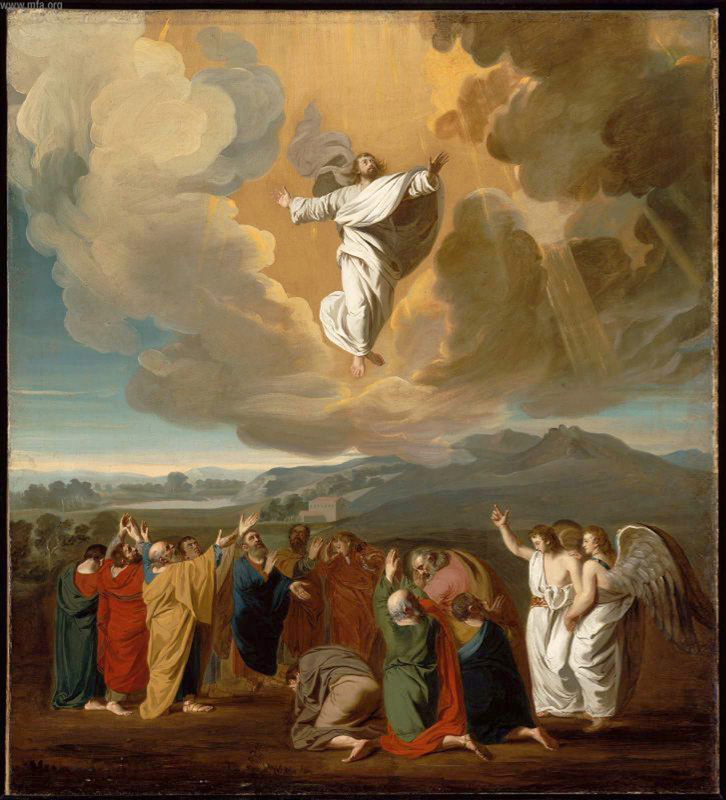
Title: The Ascension
[Click for larger image view]
Image Courtesy of Vanderbilt Divinity Library


Later this week Heather and I will have been married for 8 months now, and while for many of you that’s laughably short, for me it’s amazing how quickly the time has gone since that wedding day. I mean there is so much build up for that special day; for Heather and I we had dated in college and seminary for three years even before our engagement, and finally we were engaged and yet waited another year and a half before we walked down that aisle. And that year was full of change and expectation, I started my ministry here while Heather continued school, we dreamed of when we would live together, we dreamed of our wedding day, what we would wear, what music would play, where we would get married and who would officiate. With all of that expectation,  when the day finally did come it almost didn’t feel real, and in the blink of an eye the day was over… we were married. And yet now eight months in I start to wonder about what it was that we were really anticipating. Were we anticipating the day in which were united in holy matrimony or was it the marriage itself. Because in the matter of a few hours all of the preparation we had done for that wedding was gone and past, and yet the work of marriage had truly just started. We were finally married and yet it had really only just begun.
            I mention this because in our scripture for today we find the disciples of Christ waiting and expecting what they have dreamed and hoped for all of their lives. In their scriptures, which we must remember is only the Old Testament for them at this time, they have been hearing about this Messiah who would come and return Israel to its rightful place, and here is that Messiah, this man named Jesus.  They have followed him, watched him perform miracles, and listened to him tell stories of the Kingdom of God here on Earth and so they waited.  Jesus was then arrested and crucified, and while the disciples did not understand, while their faith was shaken, they waited, waited for the arrival of this Kingdom of God. Jesus rose from the grave restoring hope to the disciples and now for forty days they have followed him and prepared for this very moment, This moment when Christ would ascend to the throne. And so in great joy and expectation the disciples ask, “Lord, is this the time when you will restore the kingdom to Israel?"  And Christ replies, “It is not for you to know the times or periods that the Father has set by his own authority.”
            The disciples  seem to be asking the right question, all of their expectations have been waiting for this day in which Jesus Christ would reign, and when he ascends that is exactly what he does; he sits at the right hand of God the Father on the throne. So this must then be the time when the Kingdom is restored. And yet Jesus simply answers, “It is not for you to know the times or periods that Father has set by his own authority.”  Frustratingly Jesus neither gives us a simple yes or no.  At first glance it seems as though Jesus denies that this is the time of the Kingdom, and yet when we look at his reply we see that that is not the case, he simply tells us it is not for us to know the period or times set by the father.
            When we hear this we may become frustrated just like the disciples. We want to ask, has the Kingdom of God arrived on Earth or is it still to come, and the answer to this question is just as frustrating. This is not a yes or no question and yet the answer is simply yes.  Has the Kingdom of God arrived on Earth, yes!  Christ came to Earth as a human, took on our sinful and broken nature all the way to the cross, and then conquered it with his resurrection.  Freed us from our slavery to sin and death, and created with us a new covenant by water and the spirit. Christ freed us from ourselves so that we may truly follow him, and throughout his life both before and after the cross, Jesus taught us what following him would truly look like. Through all of this action Christ has created a new world order, Christ has established his Kingdom on Earth.
            And yet if we ask if the Kingdom is still to come then the answer is yes as well.  It is in fact a lot like a marriage. If after that wedding day, you ask if that couple is married then answer is of course yes.   But if you were to ask that couple if on that day their marriage was complete, well I’d hope they laugh, for it has only started. Our day of ascension is almost like that wedding day. Christ’s bodily ministry on Earth is over, he has done everything he has needed in order to establish his kingdom and now he takes his rightful place on the throne, the kingdom is established and nothing can take that away.  And yet though it is established, it is only the beginning; many years must come until it arrives in completion. How many years? Well now we are asking the disciples question, and we get the same response they did, it’s not for us to know.

            The question of how long or how soon is not what we should be focusing on. How long do I have with Heather, how long until our marriage is complete; 40, 50, 60 years, or 1 year, one month or even one day?  As humans we do not know when our lives will end, when the lives of our loved ones may end, and yet marriage it is not the  1 day or 60 years that matter, what matters is what you do with it. What matters is how we are working together to grow and strengthen our marriage each day.  And so likewise Jesus is telling us it is not for us to worry about when the Kingdom of God will come in completion. We have been the assurance that the Kingdom has been establish and nothing can change that. We have been given the hope that one day the world will be renewed and restored as the Kingdom comes in final glory and we feast at the heavenly banquet. It is not for us to worry about when, it is for us to worry about what we are doing to bring forth and build up that Kingdom in the meantime. How will we respond to the grace given to us by our Lord and savior Jesus Christ. How will we allow the power of the Holy Spirit to work through us?  How are we striving to bring forth the Kingdom of God?